Showing posts with label Ajax. Show all posts
Showing posts with label Ajax. Show all posts
Friday, June 12, 2009


Tuesday, May 05, 2009
Which Ajax framework should I use?
Matt Raible did a nice comparison of four popular Ajax frameworks, namely Dojo, Ext JS, GWT, and YUI, using different evaluation criteria. Here's his conclusion:
After working with the various frameworks, we believe that all the frameworks were very good and could be used to write applications with.
Monday, July 07, 2008
Web 2.0 vs. Web 1.0
Via Grainne Conole.
A recent article in First Monday by Graham Cormode and Balachander Krishnamurthy on key differences between Web 1.0 and Web 2.0.
Web 2.0 is a buzzword introduced in 2003–04 whWich is commonly used to encompass various novel phenomena on the World Wide Web. Although largely a marketing term, some of the key attributes associated with Web 2.0 include the growth of social networks, bi–directional communication, various ‘glue’ technologies, and significant diversity in content types. We are not aware of a technical comparison between Web 1.0 and 2.0. While most of Web 2.0 runs on the same substrate as 1.0, there are some key differences. We capture those differences and their implications for technical work in this paper. Our goal is to identify the primary differences leading to the properties of interest in 2.0 to be characterized. We identify novel challenges due to the different structures of Web 2.0 sites, richer methods of user interaction, new technologies, and fundamentally different philosophy. Although a significant amount of past work can be reapplied, some critical thinking is needed for the networking community to analyze the challenges of this new and rapidly evolving environment.
Thursday, April 17, 2008
SOA vs. WOA
A nice post by Dion Hinchcliffe on the shift from Service-Oriented Architecture (SOA) to Web-Oriented Architecture (WOA).

Monday, April 14, 2008

Tuesday, February 12, 2008
GWT Ext 2.0 Released
GWT Ext 2.0 has been released with several new changes and widgets.
Demo : http://www.gwt-ext.com/demo
Project Site : http://www.gwt-ext.com/
Release Notes : http://gwt-ext.com/release_notes.html
GWT-Ext is a powerful widget library that provides rich widgets like Grid with sort, paging and filtering, Tree’s with Drag & Drop support, highly customizable ComboBoxes, Tab Panels, Menus & Toolbars, Dialogs, Forms and a lot more right out of the box with a powerful and easy to use API. It uses GWT and Ext.

Thursday, December 13, 2007
GWT and NetBeans

On the Google Web Toolkit blog, Jeet Kaul, VP of Sun's Developer Products and Programs talks about using NetBeans to build web apps with GWT.
Google Web Toolkit is getting a lot of attention in the web developer community thanks to its interesting way of avoiding the need to write JavaScript code for interactive web applications. Developers from the NetBeans community recognized the benefits of such a solution and created a plug-in which integrates GWT support into the NetBeans IDE. NetBeans users can now choose GWT as one of the supported web frameworks, and NetBeans then helps them with all the important tasks such as editing, building, running and debugging GWT applications.related links:
- GWT Support Plugin for NetBeans project homepage.
- A screencast to learn more about GWT support in NetBeans.
- A good course for GWT and NetBeans.
Tuesday, October 30, 2007
jQuery vs. Prototype
Via Dion Almaer - Ajaxian
A comparison between the jQuery and Prototype Ajax frameworks by Remy Sharp.

Wednesday, October 17, 2007
Ajaxian 2007 Survey Results
Ajaxian published the results of their third annual Ajax Reader Survey. Some observations according to the Ajaxian team:
- Prototype and Scriptaculous still dominate the field with 68% and 59% of readers using them, respectively. jQuery has a respectable 48% share. Yahoo UI!, Dojo, and Ext JS round out the top six. Google Gears enjoys usage by 22% of survey participants--pretty amazing for its youth. Despite Java's popularity amongst our readers, DWR is only used by 13% of readers, which surprised us.
- A little over 50% of readers use PHP, and about 40% use Java. Only 20% of readers use .NET technologies.
- The biggest concern on your mind? Cross-browser rendering issues, with 60% of you listing it as your biggest concern.
Monday, September 17, 2007
60 Quality AJAX Resources and Tutorials
A nice guide that provides several good Ajax resources and tutorials on the Web. Well worth a look!

Wednesday, September 12, 2007
GWT 1.4 is no longer in beta
2 weeks ago, Google also announced that GWT 1.4 (my favourite Ajax toolkit) is released and is no longer in beta.
Here are the major enhancements as provided on the GWT blog:
New widgets and librariesA list of sample applications using GWT can be found here.New deployment options and optimizations
- RichTextArea, HorizontalSplitPanel and VerticalSplitPanel, SuggestBox, DisclosurePanel, PushButton, ToggleButton, and an enhanced Image widget make advanced applications easier than ever.
- ImageBundle automatically consolidates multiple images into a single HTTP request.
- NumberFormat and DateTimeFormat make easy work of complex internationalization and localization.
- You can finally use java.lang.Serializable with GWT RPC, and the GWT RPC server-side subsystem is no longer intimately tied to servlets. You can easily wire it into any Java back-end infrastructure. Spring fans, rejoice.
- A new JUnit-based benchmarking subsystem makes measuring and comparing the speed of code snippets as easy as writing unit tests.
- Adding GWT modules to an HTML page is now simple: just add a tag.
- You can now include GWT modules across domains. Note that including scripts from other sites that you don't fully trust is a big security risk.
- External JavaScript files referenced from your GWT module load synchronously now, so script ready-functions are no longer needed.
- Auto-generated RPC whitelist files are now produced during compilation to help catch accidentally responding with objects that compiled GWT client code wouldn't be able to deserialize.
- The GWT distribution now includes a DTD for the GWT module XML format, making it easier to configure modules in an DTD-aware XML editor.


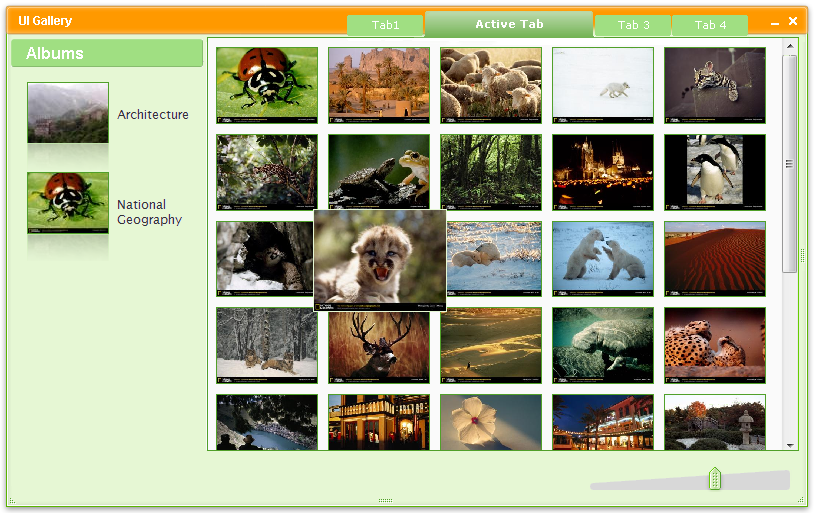
jQuery 1.2
The jQuery team announced the release of their Ajax toolkit in its version 1.2 with a series of new interesting features.
Here is an example of how the result could look like.
Wednesday, February 14, 2007
Google Search AJAXified
The ReadWriteWeb blog pointed to the AJAX based integration of maps into Google Search. "Google has introduced a bit of Ajax into its main property search, by way of integrating Maps on some searches...However, we should note that this new Ajaxified search feature is not fully deployed yet - only a small percentage of returned results come with mapped addresses". This new feature is shown in the picture below:

Tuesday, February 06, 2007
Prototype 1.5 PDF
Thanks to Josh Clark, the PDF of the complete API documentation of Prototype 1.5 is available and can be dowloaded here.

Thursday, January 25, 2007
ASP.NET AJAX 1.0 Released
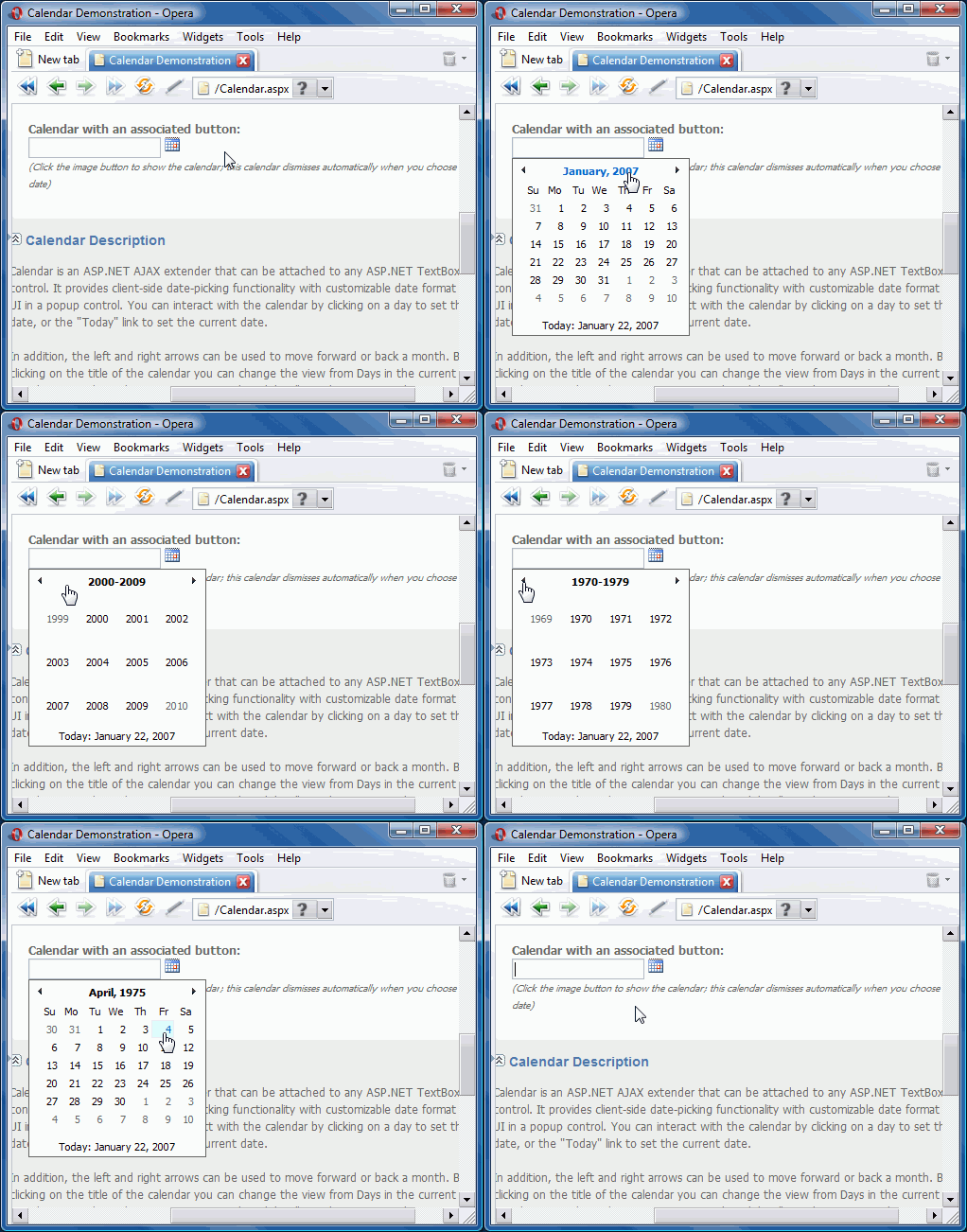
Scott Guthrie, General Manager within the Microsoft Developer Division, announced the final release of ASP.NET AJAX 1.0 (aka "Atlas").
ASP.NET
ASP.NET AJAX 1.0 delivers a rich client-side
Future Plans
While the core ASP.NET AJAX 1.0 release is now officially shipped, we are definitely not slowing down. :-)
All of the ASP.NET AJAX 1.0 features will be integrated directly into the next release of ASP.NET (codename: "Orcas"). Visual Studio "Orcas" will also provide client-side JavaScript intellisense, JavaScript compilation checking, and rich JavaScript debugging support for ASP.NET AJAX scenarios.
We are also already at work on the next ASP.NET AJAX release, and will continue to add new features and improvements to the supported ASP.NET AJAX core.
Tuesday, January 23, 2007
Java to JavaScript Compilation with AJAX and Spring Integration
A nice article by Ben Alex on Java to JavaScript compilation. In this post, the author explores a new open source Java to JavaScript compiler named Java2Script Pacemaker (J2S), presents an initial Spring integration, and compares J2S with existing compilers such as Google Web Toolkit (GWT) and Open Laszlo. According to the author "J2S is currently differentiated from GWT in several broad ways. The first is its compiler technology, which builds on Eclipse Abstract Syntax Tree (AST) and therefore requires Eclipse. However, Eclipse JDT Core supports a headless mode and thus it wouldn't be difficult to execute J2S compilation from an Ant plugin or Maven mojo. The second difference is that J2S provides comprehensive runtime reflection and widget binding capabilities. GWT prefers compile-time JavaScript optimisations, at the expense of these runtime services. J2S – on the other hand – recognises that a combination of Moore's Law, improved browser JavaScript interpreters and JNI-like JavaScript optimisations collectively provide scope for adequate performance, whilst still enjoying fuller JRE emulation and other runtime services."
Tuesday, January 09, 2007
GWT: Compiling Java to JavaScript
While browsing through the Ajaxian blog, I also ran across this interview by Frank Sommers with Scott Blum, the Google software engineer behind GWT's Java-to-JavaScript compiler, talks about the challenges of turning Java source code into JavaScript.
The following questions have been answered by Scott:

- Could you start by giving us an overview of the GWT development process?
- What are the biggest differences in the JavaScript the GWT generates for the various browsers?
- What happens to a Java class when it's compiled into JavaScript?
- What are prototype-based objects?
- What types of Java code are the hardest to translate to JavaScript?
- You mentioned that browser-specific functionality is brought into the compile process from external libraries. Can you explain how that works?
- Once you have those browser-specific versions, how do you deploy them so that each browser gets only the code aimed for it?
- You said earlier that JavaScript is more flexible than Java. In what way do you take advantage of more flexibility in JavaScript to get, say, better performance, or more concise code?
- In addition to excellent Java developer tools, what do you think are the biggest differences for a developer between writing a browser-based application in Java versus writing that app directly in JavaScript?
- What are the GWT compiler's current limitations in translating Java code to JavaScript?
Ajaxian Predictions: Ajax in 2007
On the Ajaxian blog, Dion Almaer and Michael Mahemoff have posted their predictions for 2007.
Some of Dion´s predictions:

- Someone tries to coin Ajax 2.0.
- A large amount of apps have flash AND ajax, and users don’t know or care.
- A widget api means componts can run on many frameworks using one api.
- Google Office. Finally!
- With its excellent documentation and pattern language integration, the Yahoo UI library becomes the standard weapon of choice among mainstream developers seeking a pure Javascript framework. In the Java world, GWT makes great strides as the platform becomes richer and design patterns emerge.
- Mobile web development continues to suck.
- Javascript increasingly recognised as the world’s most popular “second language” and becomes popular as a lingua franca to describe generic programming concepts. Several attempts at server-side Javascript frameworks.
Monday, January 08, 2007
Javascript Flickr Slideshow

jsFlickrSlideshow is a "javascript slideshow that shows images from Flickr.com. Specify tags and/or users to limit the slideshow. Uses the "canvas" object, works in firefox and internet explorer using the excanvas.js library. Easily integrate into any web page". Check the project page or try out a demo.
Wednesday, December 13, 2006
GWT is open source
On the Official Google blog and Google Web Toolkit blog, the GWT team announced GWT 1.3 Release Candidate. The only thing that has changed since GWT 1.2 is the the release of all the source code for GWT under the Apache 2.0 license.
Subscribe to:
Posts (Atom)